


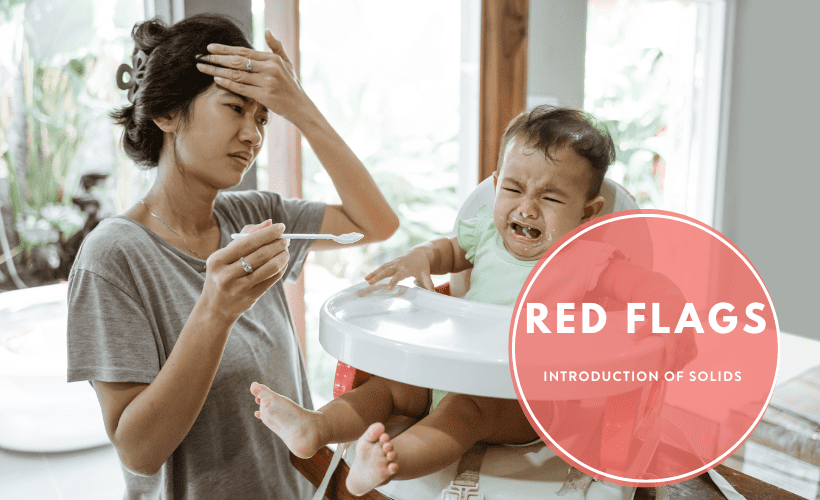
Starting solid foods for your baby is a significant milestone, but it can also present some challenges. While most babies take to solids with ease, some may experience difficulties, such as gagging, trouble with textures, swallowing problems, and vomiting. It is essential for parents to recognise potential red flags that could indicate difficulties with the introduction of solids, so they can take action early and seek help if necessary.
In this blog post, we will explore some of the common issues that babies may encounter when starting solid foods and provide tips on how parents can support their babies through this transition.
Starting Solid Foods: Baby’s Readiness
Most babies are ready to start solid foods around six months of age. However, every baby is different, and some may be ready earlier or later than others. Signs that your baby may be ready to start solid foods include:
-
Being able to sit up with support
-
Showing interest in food others are eating
-
Being able to hold their head steady
-
Reduced tongue-thrust reflex, which helps prevent choking by pushing food out of the mouth.
If your baby is not showing any of these signs, it may be best to wait a little longer before introducing solid foods.
Red Flags to Look Out for When Starting Solid Foods:
It is a journey of learning for babies. Parents will need to stay cool as their baby may gag to protects her airways, or spit having not quite the skills to manage a bit of food, and even cough a little when starting solids. There are some red flags to look out for that may indicate a more serious issue. These include:
-
Refusing to eat
-
Crying or arching her back during or after feedings
-
Choking, gagging, or coughing frequently
-
Difficulty breathing
-
Vomiting after every feed
-
Diarrhoea or bloody stools
-
Constipation
-
Unhappy baby
If your baby experiences any of these symptoms, it is important to speak with your doctor to rule out any underlying medical issues.
How to Support Babies Who Struggle With Gagging, Texture, and Lumps:
Many babies may struggle with gagging, texture, and lumps when starting solid foods. Here are some tips to help support your baby through these difficulties:
-
Start with smooth, pureed foods and gradually increase the texture over time.
-
Offer small amounts of food at a time and always wait for your baby to swallow before offering another spoon.
-
Avoid distractions.
-
Let your baby lean forward to come to the spoon.
-
In due course offer some BLW food items, see list below.
-
In due course, offer hard food such as teething rusks or mango strips, or dip teething toys in yoghurt so baby can gnaw on them. The more they explore their mouth by themselves the least they will gag.
-
Avoid offering foods that are choking hazards, such as nuts, popcorn, and whole grapes.
-
Keep mealtime relaxed and positive to reduce your baby’s anxiety about eating.

How to Deal With Reflux and Vomiting:
Reflux and vomiting are common issues that some babies may experience when starting solid foods. Here are some tips to help manage these issues:
-
Offer smaller, more frequent feedings to reduce the amount of food in your baby’s stomach at one time.
-
Hold your baby upright during and after feedings to help prevent reflux
-
Avoid overfeeding your baby, as this can lead to vomiting.
-
If your baby is experiencing persistent reflux or vomiting, keep track of which foods cause unpleasant reactions, take notes or videos, so when you speak with your doctor you have precise information. Your child may need medication or further evaluation for a potential food allergy.
How to Parent in Feeding:
Introducing solid foods can be a stressful time for parents, especially if your baby is struggling with the transition. Here are some tips for effective parenting during this time:
-
Be patient and offer your baby a great deal of support and encouragement without pressurising her to eat.
-
Follow your baby’s lead and do not force her to eat if she is not interested.
-
Don’t compare your baby’s eating habits to other babies, as every child is different.
-
Ensure that your face is relaxed and looks confident so your baby feels confident she can learn this skill too.
-
Demonstrate eating simultaneously so your baby can watch you and learn from you, do not hesitate to be gross and show what is in your mouth. Baby is likely to find this funny.
Baby Led Weaning Solid Foods:
- Soft cooked vegetables such as sweet potato, carrots, zucchini, broccoli, cauliflower, and peas
- Soft cooked fruits such as banana, avocado, peaches, and pears
- Small pieces of meat or poultry, such as chicken or beef, cooked until tender and cut into small, manageable pieces
- Cooked fish, such as salmon or cod, flaked into small pieces
- Soft cooked eggs, scrambled or cut into small pieces
- Toast or crusty bread, cut into strips or small pieces
- Pasta or rice, cooked until tender and cut into small pieces
- Beans or lentils, cooked until soft and mashed or cut into small pieces
- Cheese, cut into small pieces or grated
- Yogurt or cottage cheese, served plain or mixed with fruit
- Small pieces of tofu or tempeh, cooked until soft
Where to Get Help When Starting Solid Foods:
If you are struggling with your baby’s feeding issues or have concerns about their development, there are many resources available to help. Your doctor can offer guidance and support to reduce painful, unpleasant symptoms. With texture difficulties and swallowing, talk to your doctor about seeing a speech language pathologist who can check your baby. If you are stuck not knowing how to help your baby and find that your stress level is going up, then book a chat with me to see if I can help you.
FAQ
- No head or trunk control – baby cannot sit upright with support.
- Tongue-thrust reflex still very strong – consistently pushing food out of the mouth.
- Persistent coughing, choking, or gagging with tiny amounts of smooth food.
- Wet or gurgly voice after swallowing.
- Refusing all foods despite calm, repeated attempts over several weeks.
- Not showing any interest in food by around 7 months.
- Difficulty moving food around the mouth (e.g., food sits in cheeks or falls straight out).
- Frequent vomiting outside of normal spit-ups.
- Rashes, swelling, or breathing changes after new foods (possible allergy).
- Very limited weight gain or weight loss once solids are started.
- It depends on age and readiness.
Around 6 months, start with soft or mashed textures and offer iron-rich foods like iron-fortified cereals, meat, lentils, beans, or well-cooked egg.
- If starting earlier (under GP advice)—for example due to allergy risk—use very smooth textures such as thin iron-fortified cereal, smooth puréed meat, puréed lentils/beans, or smooth vegetable purées.
Introduce one new food at a time so you can watch for any allergic reactions.
- Honey – risk of infant botulism.
- Whole nuts – choking risk (smooth nut butters are fine).
- Unpasteurised foods – milk, cheese, or juices.
- Added salt – avoid salty foods and don’t add salt to meals.
- Added sugar – no sugary drinks, sweets, or desserts.
- Raw or undercooked eggs – only offer fully cooked egg.
- Raw or undercooked meat or fish – must be fully cooked.
- Fish high in mercury – limit/avoid shark, swordfish, marlin.
- Cow’s milk as a drink – can be used in cooking, but not as a main drink until 12 months.
Most babies are ready around 6 months, but look for these signs of readiness:
- Good head and neck control
- Can sit upright with minimal support
- Shows interest in food (watching you eat, reaching for food)
- Opens mouth when food approaches
- Can move food to the back of the mouth (tongue-thrust reflex has reduced)
- Increasing appetite or wanting more frequent milk feeds
When several of these signs are present together, your baby is likely ready to start solids.
Allergic reactions usually appear within minutes to 2 hours of eating the food. Watch for:
Mild symptoms:
- Rash or hives
- Redness around the mouth
- Vomiting
- Swelling of lips or eyes
Severe symptoms (call emergency services):
- Difficulty breathing or noisy breathing
- Pale, floppy, or very drowsy
- Swelling of tongue or throat
- Persistent coughing or wheezing
Don’t force it. Offer small amounts, stay patient, and try again later — it can take many tries before a baby accepts a new food.
If your baby avoids solids by 7–8 months, growth is slow, or mealtimes are stressful, check in with a health professional.
Some ups and downs with eating are normal, but you should seek advice if your baby:
- Refuses most foods over several weeks
- Eats only a few textures (e.g., only smooth purées) with no progress
- Frequently coughs, chokes, or gags when eating
- Isn’t gaining weight or is losing weight
- Shows extreme distress at mealtimes
- Struggles to chew or move food around the mouth
If picky eating is causing stress, limiting growth, or stopping texture progress, it’s worth checking in with your GP, paediatrician, or a feeding therapist.
Most baby feeding sessions should last 10–20 minutes.
If your baby is showing signs of fullness or losing interest sooner, it’s okay to stop.
Feeding sessions that regularly stretch beyond 20–30 minutes may signal tiredness, low readiness for solids, or a need to adjust texture or timing.
Yes — milk comes first in the first year.
Breastmilk or formula remains your baby’s main source of nutrition until 12 months.
Solids start around 6 months, once your baby shows readiness signs. Offer solids after a milk feed or at a time your baby isn’t too hungry or tired.
By 9–12 months, many babies naturally start eating more solids, but milk still plays an important role until their first birthday.